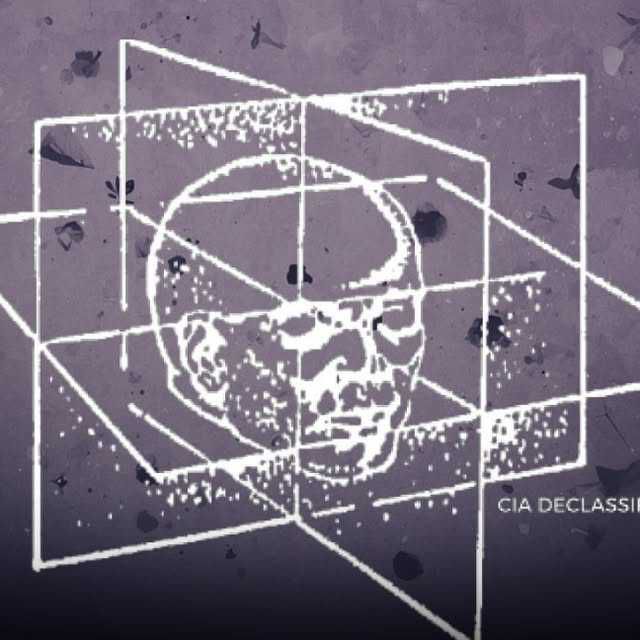
I read about something called “The Second Air” in commentator Roderick MacLeish’s novel Prince Ombra when I was 11 years old, just before the car crash. That was one of the first shiny things I found, the idea of a kind of psychic vacuum where you could hear anything you chose. “in the second air, people . . . can hear the gossip of . . . early generations, the grumbles of nineteenth-century fishermen casting off . . . the gnash of iron machines cutting granite, the scrape of shovels in the graveyard . . . Sounds of eternal conditions are all around us—night cries of ecstasy, the whispers of the dying, promises being made, and soft, disappointed weeping.” (19) This fictional construction involved clear translation of every sound made by humans and animals, however slurred or muddled. The book also features the concept of reincarnation, which we’ll get to in a future chapter.
Of course, the Second Air is a real thing, known my multiple names: the Akashic record in Hindu practice, defined as an ethereal fluid pervading the cosmos keeping account of every energetic transaction, Eyn Sof in Kabbalah, understood to describe God before any self-manifestation in the production of any spiritual ream, the “superposition” in quantum mechanics, where anything can happen, and many more.
The Second Attention is a concept from Carlos Castaneda’s self-teachings, whatever their origin, referring to a specialized state of awareness accessed by moving the assemblage point (a luminous knot in the human energy body) to a new position with a mixture of control and abandonment. This state allows for seeing the world as a complex of energy and other worlds, practices that explore deeper realities beyond consensus awareness. Revaluating your life in light of death might change your priorities. How many people did you make laugh while alive? Is that your legacy?
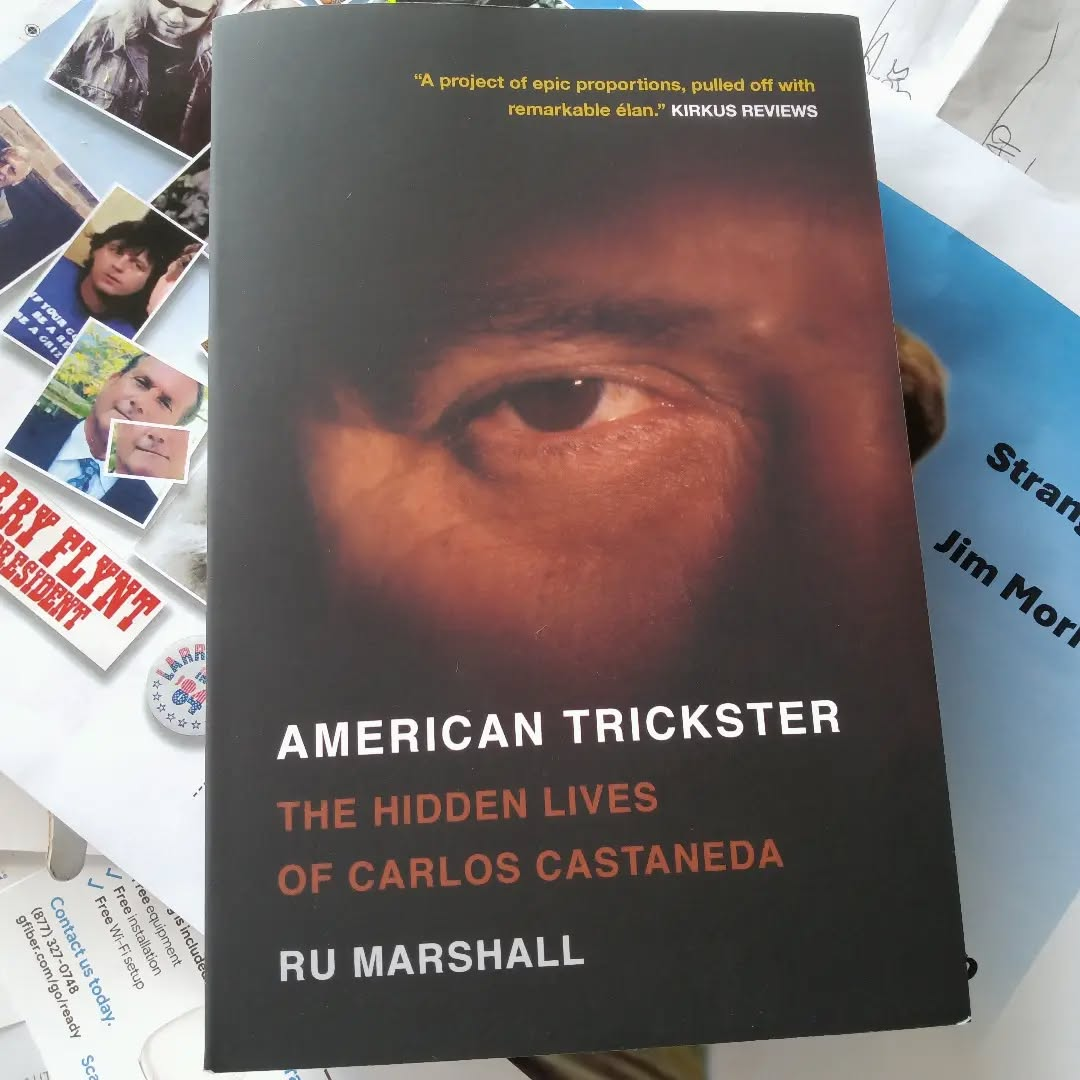
Castaneda caused a decades-long stir with his series of books detailing his apprenticeship to Yaqui Indian sorcerer Don Juan Matus. These books have been debunked as being largely assembled from texts in the UCLA library transliterated by Carlos and reclassified as fiction in consensus attention. “Anyone can steal, few can steal with Castaneda’s skill and aplomb, fewer still can then brilliantly combine their thefts,” writes Ru Marshall’ American Trickster: The Hidden Lives of Carlos Castaneda, giving evidence of the author’s lifelong habits of conra-indication. “Plagiarism can be—as it was with him—the means through which ideas spread. It can be an homage. You steal the words you love, those you wish had been your own . . . a form of impersonation . . . This is often how influence works in daily life. But this isn’t the species of plagiarism Carlos indulged in. His involved the careful reworking of the texts of others. A craft he raised to the level of art. If Castaneda had acknowledged his sources instead of attrinuting their words to a wise old Indian, his borrowings wouldn’t have been a problem. Nor would they have been as interesting or worked so well, .he likely never would have been published at all.’ (American Trickster, 76, 83).
Perhaps most damning for Castaneda in this connection was his assignment of the subtitle “A Yaqui Way of Knowledge” to the first one, The Teachings of Don Juan.
I don’t disagree with the premise of Carlos as a consummate trickster (which is proven here in spades) but still hold to some of the principles he introduced, ways of seeing and going at life as prescribed by don Juan, who probably didn’t exist.
Worst of all, Carlos has been damned for his “magpie” approach to spirituality (in writing his books) which is the way I went in writing my character into being, and I’ve even been talking it up as the right way to go! Still think my points are sound ones, now I have to read this book and find the right quotes to sew it all up nicely.
Here’s one attributed to don Juan and placed at the beginning of Marshall’s book: “Little by little you must create a fog around yourself; you must erase everything around you until nothing can be taken for granted, until nothing is any longer for sure, or real. Your problem now is that you’re too real.”
Anthropologists who have lived with and studied the Yaqui say Castaneda’s accounts bear no resemblance to authentic Yaqui traditions, social life, or belief systems, and there is no official statement from the tribe recognizing his mentor, “Don Juan Matus,” as a real figure. Castaneda died in 1998 after founding Tensegrity, promoted as “the modernized version of some movements called magical passes developed by Indigenous shamans who lived in Mexico in times before the Spanish conquest . . . a specific physical exercise [sic] designed to manipulate with energy in the human energetic body.” This is a description of spellbinding, in no uncertain terms.
Spiritual information effectively conveyed has power, whether or not it’s been cribbed from other sources. Beyond this, it may be that the dissemination of fundamental ancient reckonings is regulated and qualified by some invisible force. Or maybe the truth is always moving. Maybe the truth is a Fool’s Game, and fiction is the most powerful tool of conveyance. I don’t oppose anyone’s speculation regarding the artificial nature of Castaneda’s books, but I would say they provide a highly relatable template for the journey to understanding a number of intangible realities.
“The magpie took from everyone, synthesizing it all. But a careful reading shows that his primary influences when he writes about “the will of the warrior” –or about intent—are Husserl and Nietzche.” (100-101)

Whatever his true intentions, the approach to spirituality used by Carlos in writing his books is the way I went in writing my character into being, as we’ve seen. Considering the source material he used in his trickery, however deceptive his sourcing, he may have been unable to avoid the truth These points are sound ones from the world of rock and roll where everyone borrows from everyone constantly and the feeling is the point of it all. Where All is One and God is a state not a being. Where it’s all about Hacking the Source Code, and everyone shares in the same universal resource.
Another Castaneda phrase is “the ubiquitous viewpoint” which enables sorcery. I call this Empatheosis, collaboration with multiple perspecyives. Put yourself in everyone else’s shoes. Maybe that’s how we get back to the flashpoint..
Don Juan also tells Carlos that in order to make an object or situation behave in an inconceivable manner, the sorcerer must focus on its “not-doing”, which baffles and frustrates the linear logical Carlos, who wants a clear blueprint to act on. Put briefly, when you are convinced of the “doing” of something, all the ways in which it can possibly behave, you become trapped in the limited options of that perspective, and once you learn its “not-doing” it becomes unlimited. This is a similar concept as Staying in One’s Own Movie—an example being Neal Cassady’s skill at talking his way out of parking tickets when driving the Pranksters’ outlandish bus by choosing his own movie of Essential Innocence and Escape instead of joining the patrolman’s movie of Prosecution of Guilt and Entrapment—and the Second Air where you choose what to hear.
All personifications are fundamentally natural, regardless of apparent paradoxical synthetic toxicity. However deceptive a person Castaneda was—whatever his depths, and wherever he sourced his material—it came to us from Source like everything else—as a piece of the All to incorporate or discard.
Depending on your standard of self-disclosure on social media, your opinions are no longer private. The Second Air is becoming external, more visible and tangible. Even news articles posted without comment may be read as indicators of where you stand on social or political issues. Your consciousness has become performative, thanks to Facebook, and sharing of even your most mundane thoughts has become an audition for acceptance. It’s harder than ever to create a fog around oneself, even a light mist of privacy can be hard to drum up. Maybe it’s always been like that around here, to different degrees, and maybe it’s never been so extreme before.