


“I’m not really a priest or a cop or a spy, I just play one sometimes in real life.”
—Alan Graham (1944-2024)
“Anyone who ever mattered was manic,” said my late friend Alan Graham on more than one occasion. “All the men whose names went down in history. Genghis Khan was manic. Alexander the Great was manic. Napoleon was manic.”
“I guess you’re right.” I’d heard all those names. Al was Jim Morrison’s brother-in-law for 22 years and worked as Sylvester Stallone’s babysitter for a couple of years and as a fixer for self-made porn billionaire Larry Flynt when Flynt was running for president from inside a mental care center. He hated all grifters except Jesus Christ and Jim Morrison and the fictional Elmer Gantry, who we’ll get to in a minute. To him, a good grifter was tricking people into doing something positive they’d otherwise never have the will to get done. Alan Graham had a habit of going after everyone he found out was trying to write a book or make a movie about Jim Morrison and doing everything he could to oppose whoever it was, driven by his certainty that no one knew the truth and was just trying to profit off Jim’s name.

Al modeled himself on the character of Elmer Gantry (as played by Burt Lancaster) all his life. To him grifting was the highest ideal, if you did it in the style of Elmer Gantry or Jim Morrison or Jesus Christ. From his perspective he was the only one doing it correctly, out of true dedication to a sense of adventure, and everyone else was just a grifter, which may give you a sense of his humanity, whether or not it makes sense, but it must have sucked to be gone after. As long as I knew him, Al was going after someone or other, beginning with his neighbors, the [REDACTED] family of Coronado, CA. I can’t remember what the grievance was, but Al was outside their door every day with his phone lobbying against it. He never used the word “depressive” in reference to himself, but I’d say he became cynical after years up-close with a lot of self-appointed chroniclers who let him down in different ways, like Oliver Stone with the Doors movie and Albert Goldman and the guys who wrote No One Here Gets Out Alive. He hijacked unattended food carts for his daily bread in postwar Liverpool, England as a little boy. This base of desperation, coupled with a love of Elmer Gantry’s “intuitive certitude,” (as replicated by Burt Lancaster in the 1960 film version of that Sinclair Lewis novel) inspired his whole life of pursuing the portal into bliss. He didn’t play fair, but he saw his duty and did it.
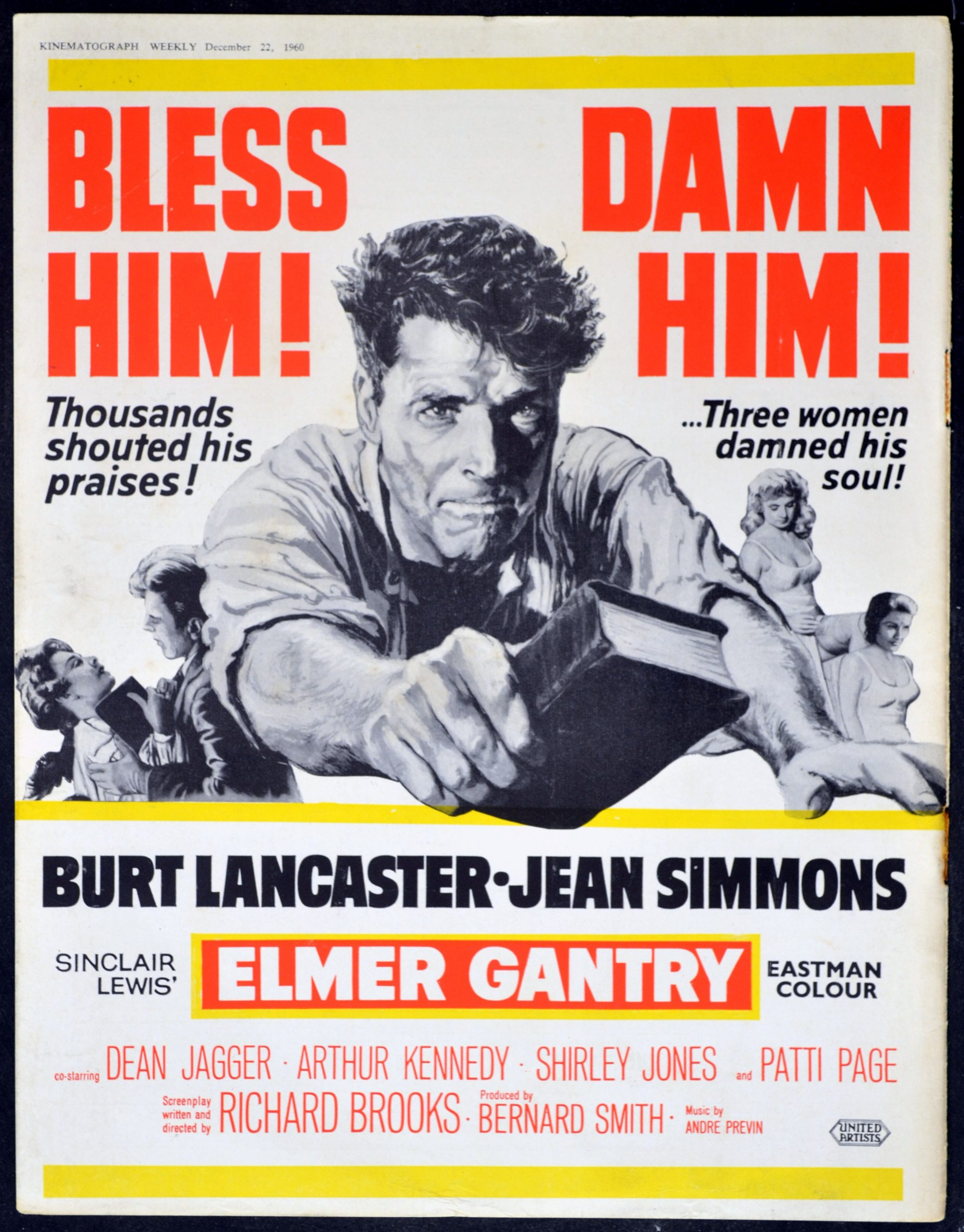
“Elmer Gantry . . . is a charismatic religious huckster driven by an essential engine of pluck and assurance,” Al wrote, in one of the three books I edited for him over the course of about 20 years. “. . . For years, I idealized [that character], who modeled himself on Jesus, bearing ‘love in both fists.’ . . . ‘You didn’t play fair, but you saw your duty and did it,’ comments Sister Sharon Falconer, played by the lovely Jean Simmons, to Gantry in the 1959 film version, in praising the effectiveness of his sermons – in an essential sense – despite their inflammatory nature.”
I became Al’s publicity agent and editor/ghost-writer after he objected to someone else’s portrayal of him in a piece I wrote about Morrison’s possibly having faked his death. “How dare you go to press with such an objectionable quote, supposedly from my mouth, without consulting me first?” “Well, I never said it was true, I just quoted the guy.” Al agreed I’d been within my rights as a journalist in that case, and by the end of the call, I’d agreed to help him re-write his book on Morrison, I Remember Jim Morrison Too. In the same way Al modeled himself on Elmer Gantry, from whom he said he’s learned a “lesson in statesmanship,” I modeled myself on this headstrong egomaniac with the bleeding heart throughout the years of my apprenticeship. He was always proposing a new line of sunglasses or a new tribute band or series of happenings or a new version of Pokemon called MojoMon or a pop-up whiskey bar.
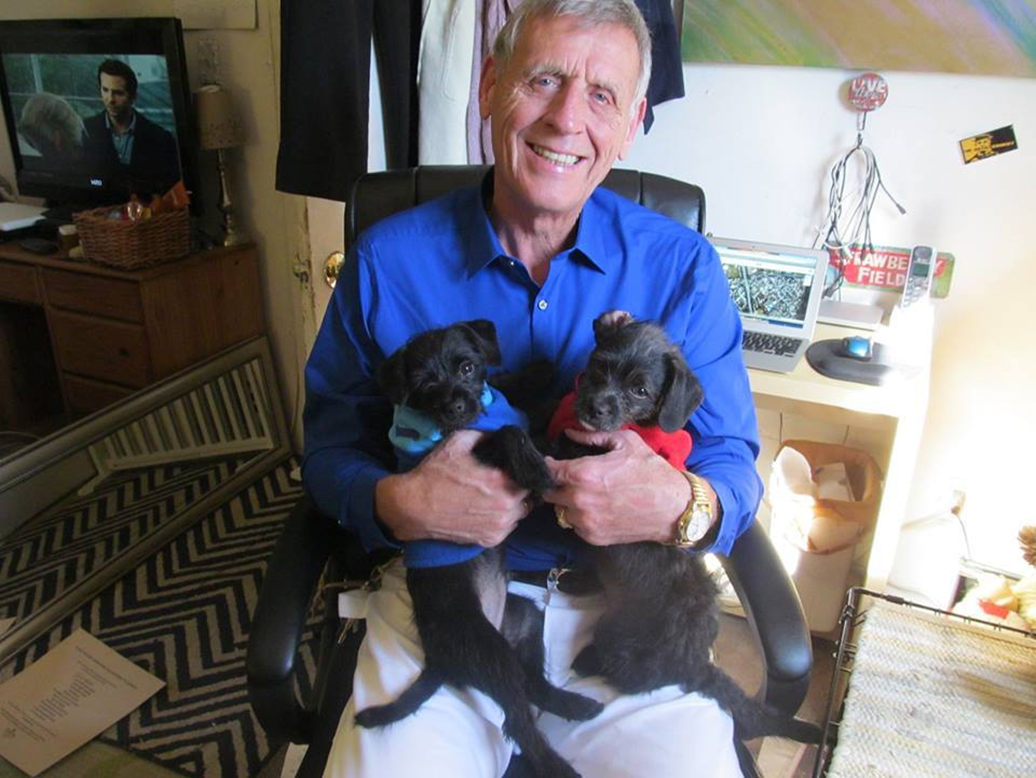
A devout Catholic who placed extreme faith in the Power of Prayer, a dog rescue advocate, ham radio enthusiast, minister, and grand old gentleman of the old school who renovated an elevated railway in Los Angeles and founded an orphanage in Pakistan, Al Graham was well-versed in history and literature and B.F. Skinner’s behaviorism and tropes of countercultural creative expression from Vachel Lindsey to his band Frankie Setback and the Ghost Cowboys playing “Seven Spanish Angels” and back around the world into the future. In some of the last footage of him, body withered and lean on the way out, he makes a blowtorch-style lighter dance in his hand to the Doors Light my Fire in his hospital bed, encouraged by the laughter of loved ones and family attending his passing.

It was always a long-distance connection, we had a lot of arguments and hung up on each other a number of times, and I can’t tell you how many “grifters” he went after in all those years, driven largely by the seven or eight years of Doors fame being the basis of all the Jim Morrison bios. He dismissed reformed evangelist Marjoe Gortner as a grifter, and eventually, Cliff Morrison, too. A few months ago, I emailed Before the End: Searching for Jim Morrison director Jeff Finn congratulating him on expanding that scope with his film, and it turned out Al had gone after him as a grifter years before, breaking up his marriage in all the heightened tension. A lot of people got the worst of his temper over the years. He was all heart, good and bad. When there was a shooting spree in Denver, he made a point to memorialize the victims by name on Facebook.

I was sitting around in my kitchen one night when the phone rang and Al reported he’d recently fallen on his face and broken his shoulder and his hip, “but I’m still standin’!”
“Well, that sounds terrible, Al. Have a seat. Take a load off.”
“Well, that might be a good idea,” he laughed, “but no, my face absorbed most of the shock. Everything else is still swollen.”
“Damn!” He’d undergone a drastic operation to unclog the arteries of his heart with a diamond-headed drill bit years before and rebounded miraculously, but I knew he’d fallen on the train a few months back, and hoped he was all right.
“But that’s not what I’m calling about,” he continued. “My son let me know I just received permission from the Estate to market Jim Morrison’s image in whatever way I want! I’m founding a string of portable whiskey bars in just a few weeks, a moveable feast like Jim wanted, and I’m gonna bring one to Denver in just a few weeks’ time, so get ready!”
“I’m looking forward to it, Al. Thanks for including me.”
“Sure thing, lad. Goodnight.”
Once he contacted me asking for an updated version of the article I’d written mentioning the radio station he’d founded in fulfillment of his Knights Templar lineage. We had a conversation about going ahead and mentioning certain things while not mentioning others because rights to Morrison’s image were still in dispute and it wasn’t a done deal until he could do the first thing, “if you get my drift.”
“Sure, I see.”
I wrote it that evening and sent it in. “Great work, Knight Zack,” he responded, and sent me a sigil he’d designed to make it official.

Al found something to admire in most of his friends. He saw Larry Flynt in the same generous way he saw his late (or not) brother-in-law, to whom he felt he owed a debt of tribute and right remembrance. He bailed Cliff Morrison out of jail.
People die and you wish you’d asked them things you never did or told them things you meant but never said. I never asked him about the Laurel Canyon scene allegedly having been an establishment set-up or got his take on the Billy Shears case. I’d love to have heard his answers to these questions, considering his youthful acquaintance with the Beatles and his close connection to Jim Morrison, and thought of asking lots of times, but never found the perfect moment.
In our last phone conversation, he told me he was getting back to writing about the Flynt years again and needed my help. I told him no, I’m moving out of here in August and I don’t know where I’m going yet, it’s just a bad time and I have to say give me until after August, I’ll do it after this coming August, but he told me, “Well, I woke up this morning 80 years old, and I’m still here, and I’m going for it. We’re moving on this one right now. Sorry, lad.”
Al must have known he was on his way out when he made this proposal and maybe I did, too, but I didn’t think of it at the time.

“Mutiny Info Cafe is a bastion of the Denver underground. Great selection of books, music, and comics, with a friendly, smart staff giving excellent service.” – Camp Elasticity Mgmt.
