I’VE BEEN WANTING TO GET into streaming since I saw some shorts of the young Tom Green messing with strangers in public years ago, but so far I’ve confined myself to podcasts. By now there’s a whole culture of streamers filming their every move and attaining private celebrity through this uploading of selfhood-to-media. Streaming breaks the sixth or seventh wall however many there are by interacting directly with its audience in real time, empowering and activating all feedback. The same ancient virus of self-fascination concentrated and hyper-personalized. One streamer in my town is pursued by his “fans” who are following him solely to torment him by appointing him to different roles and interviews of every kind imaginable—strangers from the web tricking him, lying to him, gaslighting him, sending him phone numbers, reminding him of appointments, arranging speaking events for him, offering to be his managers, alerting him of imaginary plots against him, gifting him with honorary scholarships to schools, signing him to made-up recording labels, pretending to be his friends and fans while enjoying his discomfort in the face of this unending assault and broadcasting it on their own channels. And this “lol cow”* unvaryingly falls right into every con because of his self-perceived status as a “famous singer-songwriter” liable to be recognized wherever he goes, never learning his lesson however many times it’s taught in every different way. I don’t know the name of his affliction but he’s led through life this way and there are whole channels devoted to these films of the tortured self-torturing pawn and more channels devoted to their analysis. Some make for very good viewing while others make you feel like a heartless vampire just for watching, but you keep on watching. This culture bleeds entertainment and we’ve been conditioned to drink those drops to nourish our addiction to the spectacle. Just look how hard we’re staring at ourselves believing it’s someone else. Still greater focus is hard to imagine. We’re addicted to our own reflection. This is remake culture, too. I’m sure you’ve noticed. We can’t seem to stop planning the past. And now we’ve got A.I. to do the rewrites and streamline the process of this spell we’re casting on ourselves.
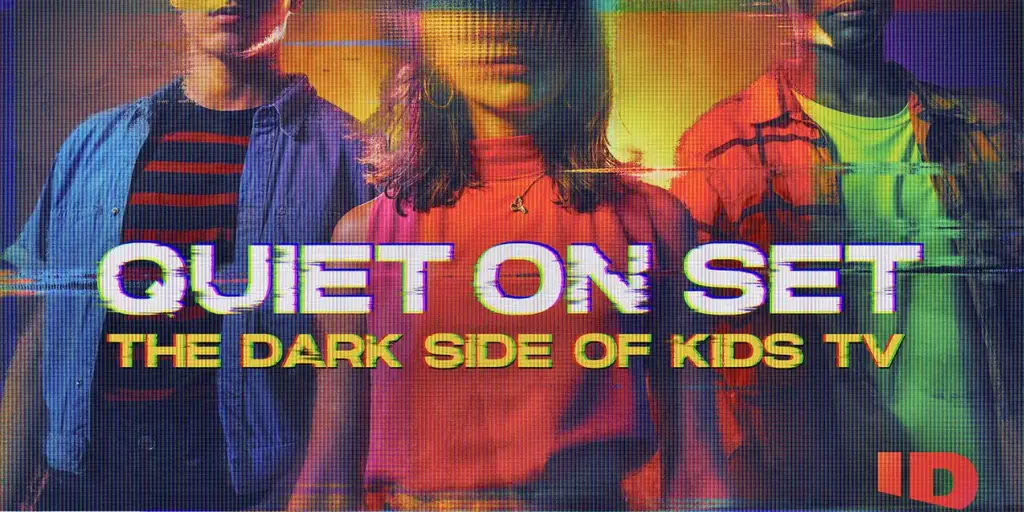
We’re all guilty of spectator culture as viewers of others’ lives as entertainment, and by making ourselves into spectacles. We’re all guilty of liking and not liking people we’ve never met because we liked or didn’t like a plastic approximation of some representation presented by them (pick your favorite). This is a game show and we are all its hosts and we are all its contestants. “Stay in your own movie,” the Merry Pranksters reminded each other in 1964, recognizing the all-pervasive nature of this vicarious symbiosis, which has been going on the whole time in this country, long before “Reality TV” made everyone’s life a game show—where every exposure of industry corruption gets made into a show or a movie to profit the machine and further our self-obsession, where you have to be a voyeur to expose the voyeurism. Quiet On Set: The Dark Side of Kids TV, where former child actors relate stories of abuse on various Nickolodeon sets, is one example. The formerly hyper-peppy Amanda Bynes, long absent after breaking out on that network as a kid, recently resurfaced as co-host of a podcast, pronouncing her words in a new inflection with a manner so subdued I think it might have been a joke on her part, and if so, hats off to her. Her co-host, the robed and bearded Paul Sieminski, who dominated proceedings, was rumored to have sacrificed Ms. Bynes’s dog, which he denied. Speculation of the robotic acting Ms. Bynes was being used by Sieminski in some way was rife. The podcast was cancelled after that first episode, which makes me think it might have been a joke. Or maybe it wasn’t. I guess everyone feels pretty traumatized these days one way or another, but I can’t say I’ve ever been covered with peanut butter, tied down, and offered to dogs, like Tyler Hearne was in one skit. That’s got to have an effect on a person. And all those skits with the feet. And the Nickolodeon foot logo. I just watched an apology video from that guy what’s his name in the form of a self-interview by proxy and he never mentioned feet. Ms. Bynes did not participate in the documentary and has stated that her time at the network was a positive experience.
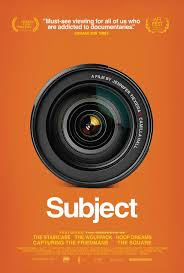
The makers of a documentary called The Staircase (2004), however well-intentioned, made Margie Ratliff uncomfortable by putting members of her adoptive family into the media eye as characters for the viewing public to form private opinions about. That’s just the way things are in this giant jukebox of a culture. As Ratliff states in Jennifer Tiexiera and Camilla Hall’s excellent documentary Subject (2023), in her opinion, her father, Michael Peterson wasn’t guilty of killing her mother Kathleen. I don’t know to what extent this held for hers, but military families are typified by habitual codes of non-disclosure. It was the filmmakers’ plan to vindicate Peterson, but Margie never wanted her private life to be shown on TV. She appears as one in a cast of unwilling subjects interviewed in this excellent documentary showing the need for a more inclusive method of looking at each other’s lives, driven by something besides sensation and profit. Also included are Arthur Agee (Hoop Dreams, 1994), Jesse Friedman (Capturing the Friedmans, 2003) and others. Subject is currently available for viewing at Amazon Prime and Kanopy. For longer than I’ve been alive, society has it figured that public figures and convicted felons have no rights when it comes to how they’re represented. But where do we draw the line?

The performing arts have always reached deep into us, and vice-versa. The Merry Pranksters coined the phrase “Stay in Your Own Movie” as shorthand for practicing self-governance in recognition of the media’s pervasive effect on the lives and minds of U.S. citizens. Call it the societal-entertainment complex. Most people are passive spectators of the endless parade of celebrities, artists, writers, musicians, criminals and accused criminals, bachelor/ettes, masked singers, Ukrainian orphans, and hypnotists and etc. made the de facto subjects of unlimited films and shows and biographies and now even post-mortem holograms to fatten paying public attention. You know the story about yelling “Jump!” at the potential suicide? That notorious occurrence, recently fictionalized in two or three seconds of another new film, this year‘s Beau is Afraid, was one foundation for Guy Debord’s Situationist treatise The Society of the Spectacle, which came out in 1967. The same kind of cannibalistic voyeurism has increased in scope and popularity in years since, Our views-driven consumer society exploits all outliers for their every last drop of entertainment value, always eager for another glimpse of other people’s private lives. Who can deny it? Along with the commodification of personal experience enabled by the proliferation of social media, society looks to be drowning in its own reflection with pleasure, and spellbound on the point of our gore.
I’m not sure where it started. Was it the OJ trial (see OJ: Made in America) or Ruby shooting Oswald? They got footage of that, too. And I don’t know when I first became aware of this self-consuming business. I’ve been alive long enough to see the cycle—of fame to dysfunction to death to commemoration by media gesture—play out a few times in a few different ways. One current example of this cannibalistic pathology is the case of Gypsy Rose Anderson (formerly Blanchard). There have been two or three Depp vs. Heard movies so far. And we’re still waiting for the next installment of the Natalia Grace narrative. The whole issue took a turn for me when I heard about the rights to Aileen Wuornos’s life story having been sold to a television network (complete with allegations from the allegedly insane Wuornos that the cops had allowed her to kill for some time to spice up the narrative for higher pay). That got me thinking about the limitless reconfigurations of criminal history in American fiction and nonfiction—how many books about the Manson family, the Son of Sam, the Zodiac killer and other popular villains there are, and how those industries productive of revenue are always sustained as long as possible around here. Considering the popularity of reality shows, the preponderance of remakes, and the dwindling store of originals, it seems like human video culture has started to eat itself. We’ve all been infected. I spent today binging a guessing game show featuring the relatives of undisclosed celebrities. Another show about the prevalence of deep-fake technology may have scared me straight. “No [human being] anywhere is safe from this technology.”
* (Internet, slang, derogatory) A person whose eccentric or foolish behaviour can be exploited to amuse onlookers.