. . . but you don’t know what it is.
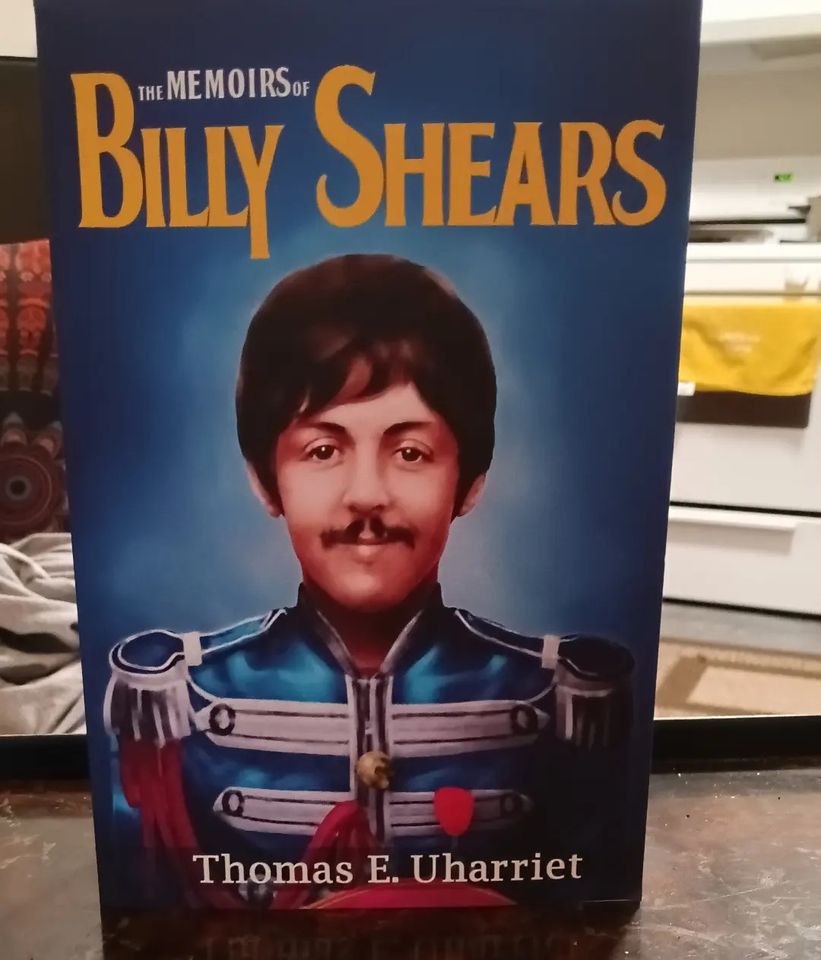
Re-reading the 2012 edition of excerpts from The Memoirs of Billy Shears called Billy’s Back (Peppers Press), designed for consumption by a “more general” demographic, lacking sections considered too “Satanic” or “Enlightened” for inclusion, inspired me to buy the whole thing, all 666 pages (plus a few). This book’s “encoder” Thomas Uharriet is a Buddhist poet residing in Utah known previously for writing haikus who put this together with the help of session musician William Shepherd (Shears), who played a few characters in his career as an entertainment agent, including, allegedly, the late Vivian Stanshall of the Bonzo Dog Doodah Band, as featured prominently in the Beatles’ Magical Mystery Tour LP.
This article is more of a reaction than a proper review of this book, whose central theme and point is held in doubt by the passage of time and consensus opinion. Reading it is an exercise in getting out of bounds. And before I continue, if James Paul McCartney was never replaced, due credit to him for being one of the most accomplished and prolific songwriters and musical masterminds of the late 20th century. If he was replaced, this character Billy Shears is a giant in modern history. Just think of all the changes in Paul’s life since 1966. His wife Linda. The band Wings. The Japanese pot bust. Per this narrative, session musician Billy Shears had to go through all that stuff, which is usually perceived in another way, as having happened to the real Paul, along with painful brow lift exercises and plastic surgery and training himself to play bass left-handed in order to play live that way, not to mention adherence to whatever Masonic oath he made all those years ago and maintenance of his farm in Scotland AND being a musical mastermind, collaborating with everyone from Stevie Wonder to the guy from Nirvana. It was a long and winding road for the Shepherd character stepping entirely into the life of a well-known pop star and it cost him his other identity and got him knighted and more. I’m not trying to sound like I’ve swallowed the sinker yet here, but this book is a marvel, and no straightforward review of it is possible. “Self-disclosure is what I want. It is the reason I went public with my paintings and poems. It is why I have altered my press attitude. Before I promoted the public Paul, and hid the private William. I would never reveal my private life, the real me. Now, approaching the end of my road, I want you to know the real me. It is not easy for me. The private Paul is just another bloke who wants love. Nothing too stimulating there, just the same old story of the life that we all share.”(390-91)
Besides which, there seems amble reason to credit this multiply-talented cultural superhero with infamous English occultist secret agent Aleister Crowley as a parent. And they sure do look alike. Which also makes him George W. Bush’s uncle, according to another theory.

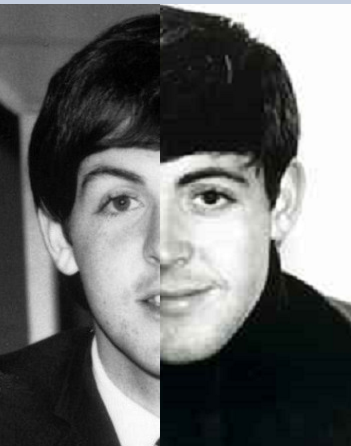
I should add: the theory of McCartney’s replacement in 1966 or later is complicated, for this reporter, by another theory* I came across recently concerning his having been one of a set of twins, and there always having been two players in the role of Beatles bassist. This one is hard to dispute, given highly convincing photographic evidence like this (both shots from the same year, of course, it could have been a double, but that proves the existence of a double, doesn’t it, and how much is too much?):
At the same time, I feel it an informed speculation that Vivian Stanshall was in on the trick of it, too. It’s sad finding out John was never such a mastermind after all, but it all works out as it’s meant in the end.

The Bonzo Dog Doo-Dah Band in Magical Mystery Tour (1967)
Beatles producer George Martin’s son Gregory Paul Martin (who knew both Pauls if there is more than one, and does an excellent impression of that voice) wrote the introduction to this 2021 edition of Memoirs (Uharriet has updated and re-released this one a few times). He also narrated the audiobook, claiming at times he felt the original Paul was speaking through him. Besides having evidence conclusive enough to convince everyone (if it wasn’t Paul’s identity in question)–things like a different height for Paul after 1966, a widow’s peak, different earlobe style, different voiceprint, different signatures, different DNA–with the help of “man of a thousand voices” Billy Shears or Billy Pepper (Shepherd), this book’s poet-encoder Thomas Uharriet has provided an engaging exploration of how effective expectation can be in directing the masses’ perception, whether or not anyone has ever tried to do anything like that (surely not!). Just kidding, of course everyone’s always been doing it. For this reason, it’s impossible to draw a factual conclusion here, and I’ve stopped trying. “Like Donovan and the Rolling Stones, the Who also made a few fine Paul songs. My favorite one ties into this chapter by including line about the differing hair: ;The parting on the left/is now the parting on the right,’ … the next line refers to the instant mustaches on Sgt. Pepper’s and to the beard hiding my face later. ‘And the beards (mustaches) have all grown longer overnight.'” (305)
There are a lot of shifting identities involved in this legend, which has been percolating in mass consciousness and developing new manifestations since at least 1968. Some Beatles fans don’t know how to process this cue when it’s introduced because it seems like a contradiction. The conversations take interesting turns. Here’s three people talking about it:
“Anyone who knows the Beatles knows Billy Shears is Ringo. He even told you so in his 1971 song, ‘I’m the Greatest.’ And there’s only one McCartney.”
[Quite possibly. But that song was written by John Lennon. And it also contains the line, ‘and all you wanna do is boogaloo’. According to Memoirs, that was a name the other three gave this guy when he showed up and spoiled their lazy pop star fun, demanding ambitious projects like Sgt. Peppers Lonely Hearts Club Band and Magical Mystery Tour when they were just beginning to get their Revolver on. They wanted Billy to back off. The Paul McCartney most people think of when you say his name is post-66, which is weird, if you think about it. With the exception of Yesterday. I’m not saying anything’s true here for sure, but who knows.]
“Yeah. You need to research William ( Billy) Shears Campbell.”
“Shepherd. Same guy, different trick name.”
There already exists a level of uncertainty among Beatles fans about their drastic change in style at the mid-point of their approximately ten years long career, and rumors about Paul’s death have been around since the sixties. If it is all nonsense, you’ve got to hand it to Uharriet for taking the path of least resistance and giving form to people’s unspoken suspicions with this elaborate fiction that hasn’t been disproven. “Have you seen the footage where George Harrison looks the camera dead in the eye and says, ‘It just wasn’t fun anymore after 1966?’. I’m personally convinced there were two Pauls on Sgt. Peppers and A Day in the Life was a shrine to Paul.'”
“According to this one, some of old Paul’s material was used and vocals sped up on When I’m Sixty-four to sound like him. But I’m open to all the theories.”
“Yes, I know McCartney’s double. I saw the Mersey Beat paper when I was about 8 years old, showed a photo of Paul on a slab in the morgue. Tire tracks across his chest and puncture wounds. DEAD! Not true. No way a double, left handed, with the same voice. Not happening! James Paul MCcartney is the only one!”
“Different guy.”

Choose your own adventure. If it is true, show business has been letting us know all along. The Memoirs of Billy Shears includes references to several other pop stars contemporaneous to the Beatles who also wrote songs about McCartney’s death and replacement, including the Rolling Stones, the Who, Donovan, and others. If it isn’t true, I’m proud of Paul for letting this lie come through in such a grand style, whether or not he had anything to do with it. And of the late Mr. Stanshall, too. No lawsuits from McCartney or Stanshall estate yet. “Donovan’s ‘Mellow Yellow’ is unique in that it features both of us Paul McCartneys. Paul did some of the backup vocals days before the crash, and I did some more after. Since Don was an insider, I had no need to pretend with him.” (267)
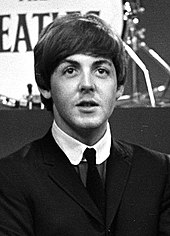
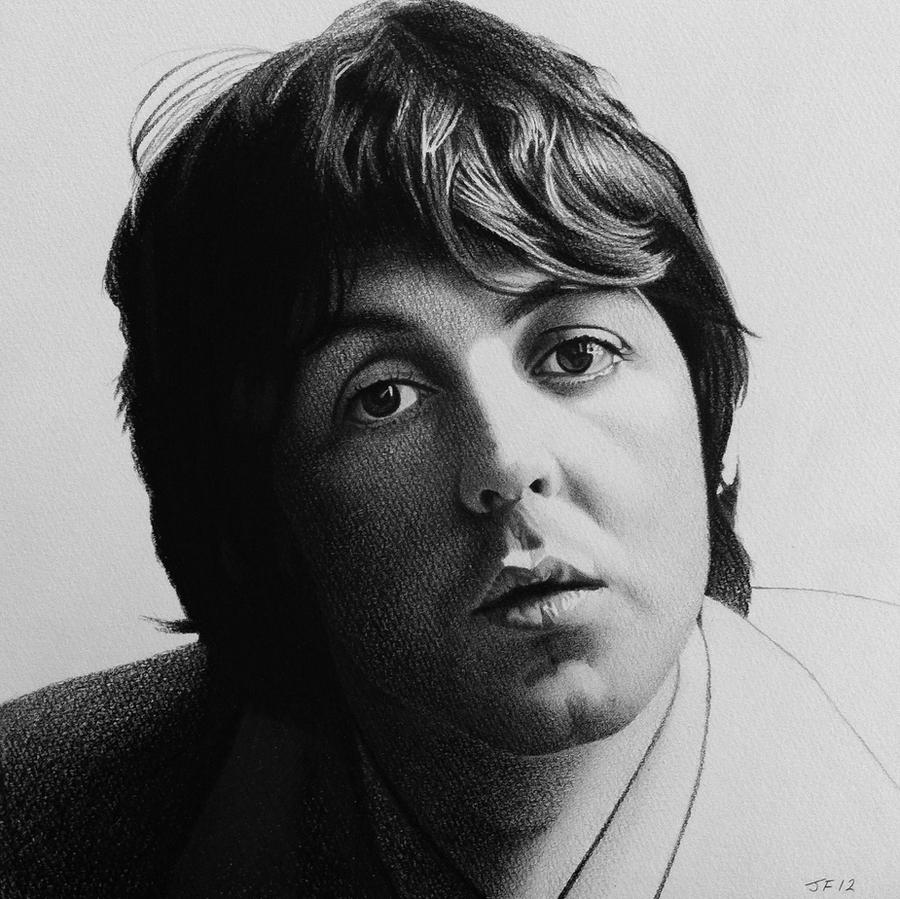
James Paul McCartney in 1965
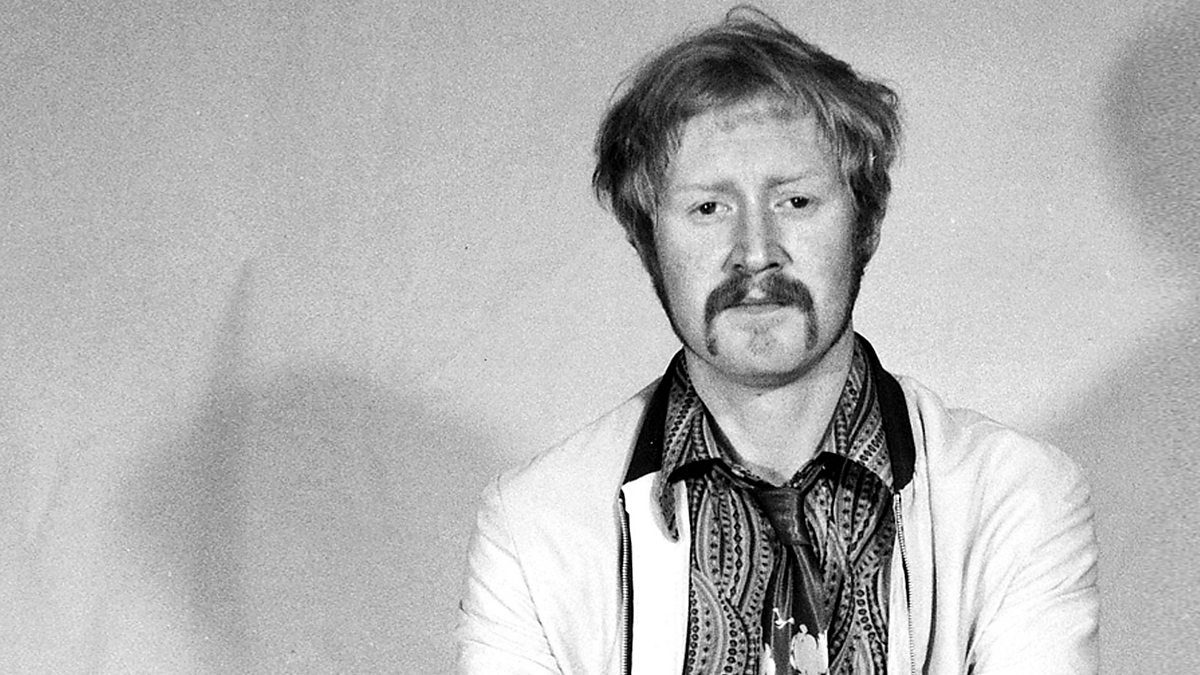
Vivian Stanshall in 1968
Stanshall was an eccentric English musical showman who was always demonstrably in favor of getting as far out as possible with his Bonzo Dog Doo-Dah (originally Dada) band, who reportedly passed away in 1995, but made-up characters can do that whenever they want, as suits their purposes. Linda McCartney had just been diagnosed with cancer and the man playing his role needed to focus on his wife. Allegedly. “Even after I joined the Beatles, I still enjoyed joining the fun comedy of the Bonzo Dog Doodah Band. I wore such distinctive disguises that when a conflict kept me from performing with them , it was easy to be away provided I lent them a gorilla suit. I did not have to loan out my latex noses and ears. Even after Vivian ‘died’ to give me more time with Linda, others wore my Vivian costume now and then.”
“When fans think of me, it is usually about the public image of the star, Sir J. Paul McCartney. Paul is just a famous role I have adopted for my career. It is something I ave, more than it is someone I am. I play the part. it is my job that I must do well. There is always enough me in that role to be successful. Music is real. It is from me … My music is a blend of us both because we are blended … Hear my material in contrast to the prior Paul’s. I like his songs but favor a different style. When I did Sgt. Pepper’s Lonely Hearts Club Band it was obviously not Paul’s style.” (390-91)

Shepherd took on the Stanshall identity and started the Bonzos a few years after the dissolution of his first band, Billy Pepper and the Pepperpots, one of the first of thousands maybe millions of bands imitating the Beatles effect. The Beatles albums became much more experimental beginning with Sgt. Pepper’s Lonely Hearts Club Band. Shepherd’s avant garde tendencies go well with the experimental electronic albums McCartney low key released as The Fireman for a couple of years before being outed as himself and releasing another Fireman album with the McCartney name on it, too, and a couple of songs with his voice. They’re all pretty good, but the first one’s my favorite.
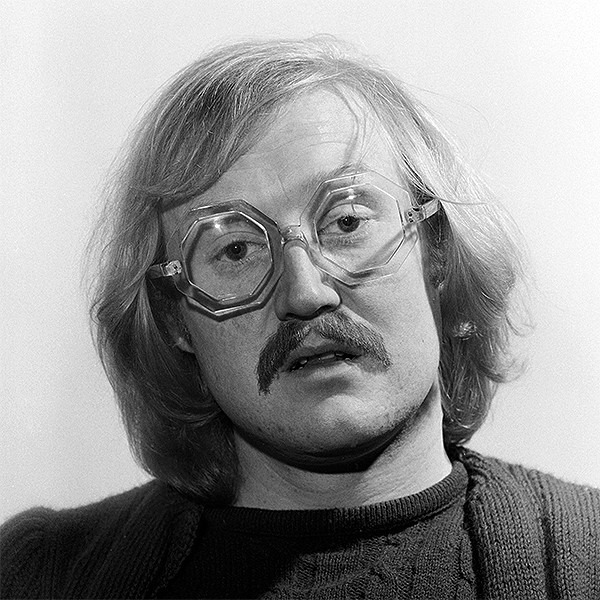
McCartney in ’68
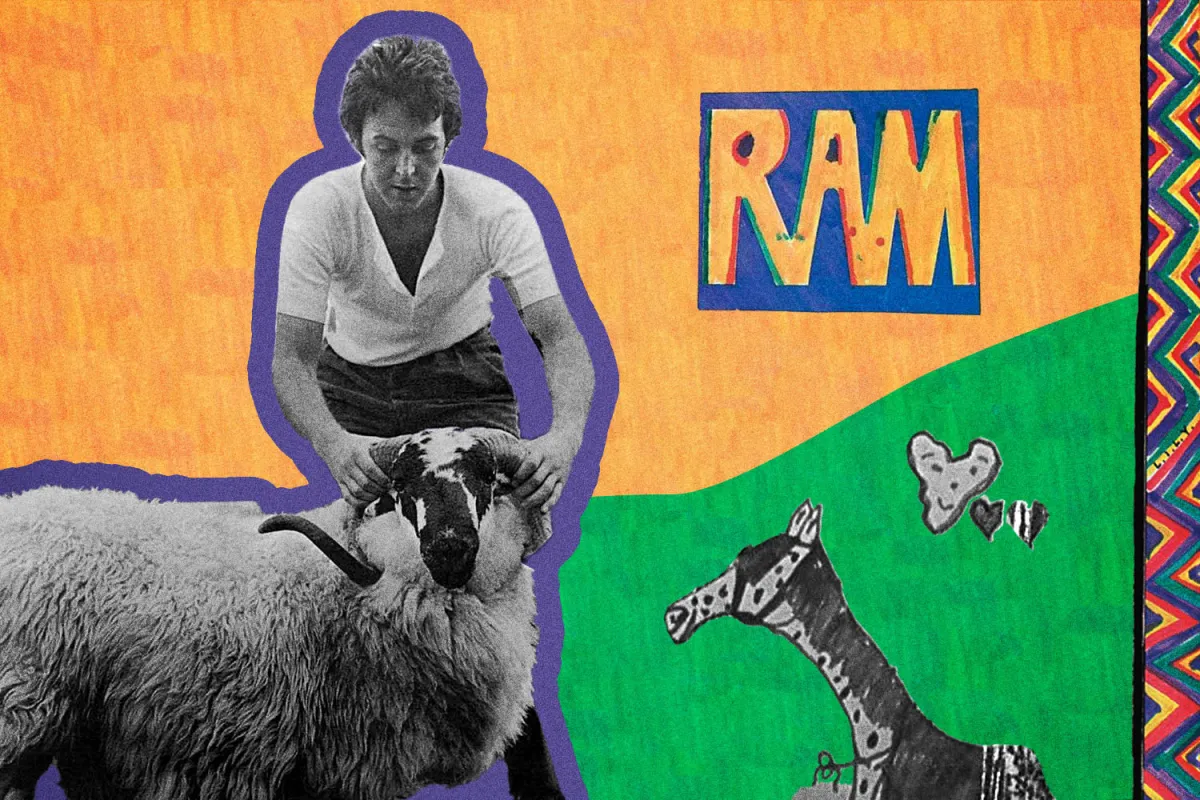
Like its topic, Memoirs of Billy Shears can be read from top to bottom or side to side because of its built-in acrostics and “word-stacking” and “whisper messages”. Besides chapters on Enlightenment, Satanism and “Paulism” that have to be read to be believed, there’s a note in the first few pages not to read the footnotes until you’re finished with the manuscript but as a secondary measure to enhance the reading experience. There are other directives seeded throughout, including an invitation from Billy Shears (William Shepherd or Sir J. Paul McCartney) to dream of him to receive further revelation. So it’s three books in one? Three or four or five books in one, and I figure maybe every writer should be doing something like that. The Beatles are a fascinating example of world stardom in the late 20th century, when televised media became a tool of societal influence, when the truth about history became harder to determine, plastic surgery being another modern complication having the same effect. I enjoy thinking some version of this is probably true, which, according to all the available evidence, may well be the case, and the showbiz world has been letting us know it all along. I won’t go into it here, but the employment of symbolism on McCartney’s Ram (1971) takes many forms. You can hardly blame Linda Eastman for going along with things, and I think she was the one to introduce Billy-Paul to vegetarianism, too.
I’m an intermediatist (Cf. Charles Fort) meaning I don’t believe in fixed truth. For me, the truth is always moving, and I’m never entirely convinced of anything, but open to everything. This allows for continual reinvention of the know n, and makes my life more interesting. Even I was hard pressed to believe this one when I first heard about it. After putting it off for years, I ordered a copy of Billy’s Back, read it, and was mostly convinced Paul had been replaced in 1966. It’s been a few more years by now and after reading the complete Memoirs of Billy Shears (2021 paperback edition) I remain all but conclusively convinced, but fundamentally uncertain. Whether or not the original J.P. McCartney was replaced by B. Shepherd (Shears), this book is a must read for anyone interested in shaking up their own preconceptions. At least that’s what it is for me. It will help you learn life’s most important lesson: Everything is a beautiful lie. Don’t believe it. But it’s true.

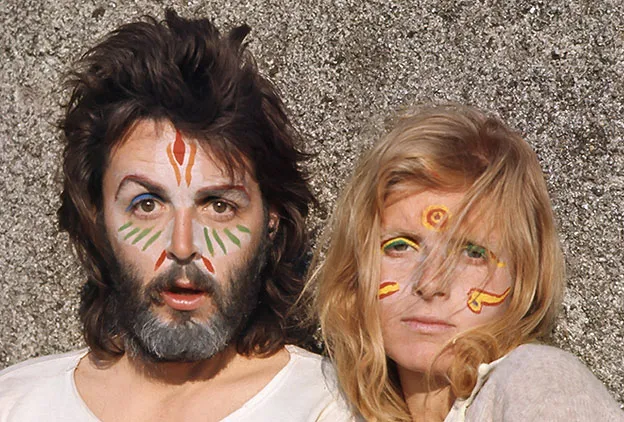
James Paul McCartney (1942- )

“Owing to my well-established over-identification as Paul McCartney, for you to know that he is not who I am, I went to some length to show you our distinct differences. Now you can distinguish between Paul and me and can now be certain he died out on that lonely road so long ago, back in 1966. We can put that matter to rest to move on to who I am. Although I am still playing as Paul, now you can see William as Paul, and not merely as Paul himself. Now you know. With that knowledge, you can call me by either name. Visit http://www.BillyShears.com for more on the Memoirs of Billy Shears.” (606) There follows an invitation to a Talent Contest with lyrics provided and the invitation to “pick one of these song-starters, finish writing its lyrics, and create … music for the song” for a chance to appear on a Billy Shears CD or video production. “Every LP or CD I have recorded has hinted at Paul’s death. This CD will be the first one to spell it out so openly.” (607)
Late Beatles manager Brian Epstein’s brother Clive helped inform another book of Beatles secrets by Richard Warren Lipack (according to which, the Beatles tripped acid at the Tate house when it still belonged to Doris Day). Author Tina Foster says there’s a whole other story of how Paul was replaced. I haven’t read her Plastic Macca yet, but her theory seems founded on the proven history of royalty and politicians using doubles as stand-ins. Hers, of course, is not the only competing account. The algebra of truth and fiction in the case of Paul’s having died or not is all founded on speculation. It will be interesting to see what happens when the subject of all this speculation dies, whoever he really is, hats off to everyone involved, and bombs away.

*There’s also a good one on Stu Sutcliffe as Andy Warhol, and involved speculation about John Lennon HERE.